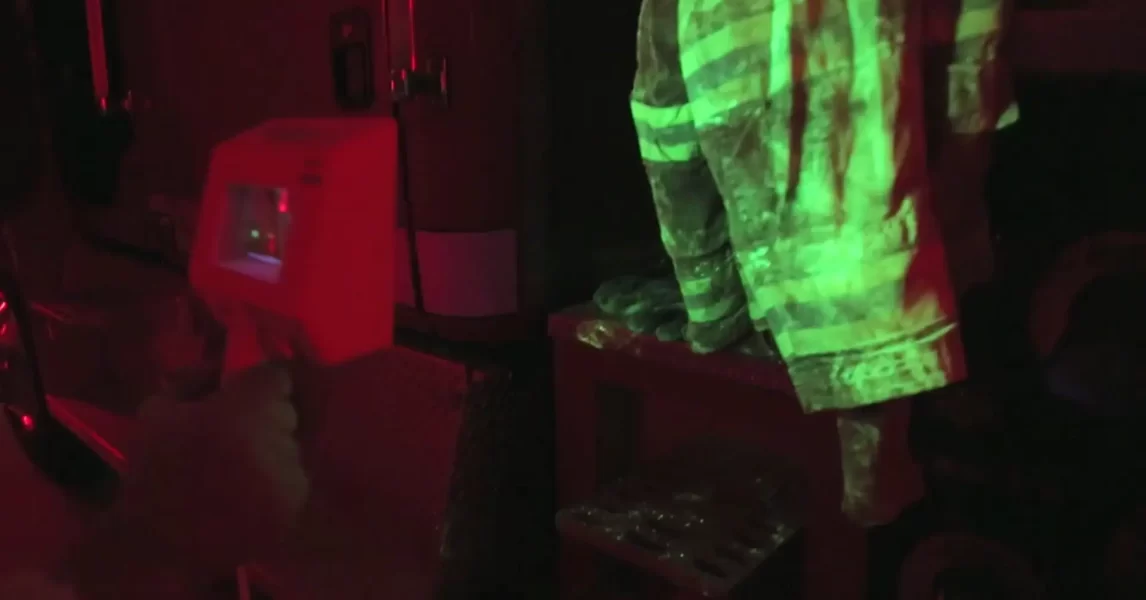
YouTube Video – The Invisible Danger of Bunker Gear Tansfer
A recent demonstration highlights a critical but often overlooked risk facing firefighters: cross-contamination after a fire response.
Using an invisible powder to simulate soot and carcinogens, researchers showed how hazardous materials can travel far beyond the fire scene—reaching fire trucks, stations, personal vehicles, and even family members.
How Exposure Spreads
At first, contamination may be visible. However, as firefighters move through their routine—back to the truck, into the station, and eventually home—it becomes invisible to the naked eye.
Despite this, the risk remains.
The demonstration revealed that contaminants can:
- Transfer from gear to fire engines and station surfaces
- Spread into personal vehicles
- Reach living spaces and sleeping areas
- Pass to others through simple contact
Even more concerning, secondary exposure was observed. In one example, simulated contaminants transferred from a firefighter to a child through a shared object.
The Long-Term Risk
While each exposure may seem small, the real concern is chronic, repeated contact over time.
This type of low-dose exposure may contribute to:
- Cellular changes
- Increased cancer risk
- Ongoing health complications
For firefighters and EMS professionals, this risk extends beyond the job—impacting their families and home environments.
Why Decontamination Matters
The key takeaway is clear: what happens after the fire is just as important as what happens during it.
Proper decontamination practices can significantly reduce exposure, including:
- Showering immediately after incidents
- Cleaning and bagging gear before transport
- Using on-scene wipes
- Keeping contaminated items out of personal spaces
These small steps can make a meaningful difference in long-term health outcomes.
What This Means for First Responders
This video reinforces an important reality:
Occupational exposure doesn’t end when the fire is out.
For firefighters, EMS professionals, and the organizations that support them, increasing awareness around hygiene and decontamination is critical.
At RescueMeds, we understand the unique risks first responders face—and the importance of protecting their health both on and off the job.