Risk & Insurance – Online Article – June 1, 2026
A new report from the Workers Compensation Research Institute (WCRI) highlights a major reality of the workers’ compensation system: medical prices can vary dramatically from state to state.
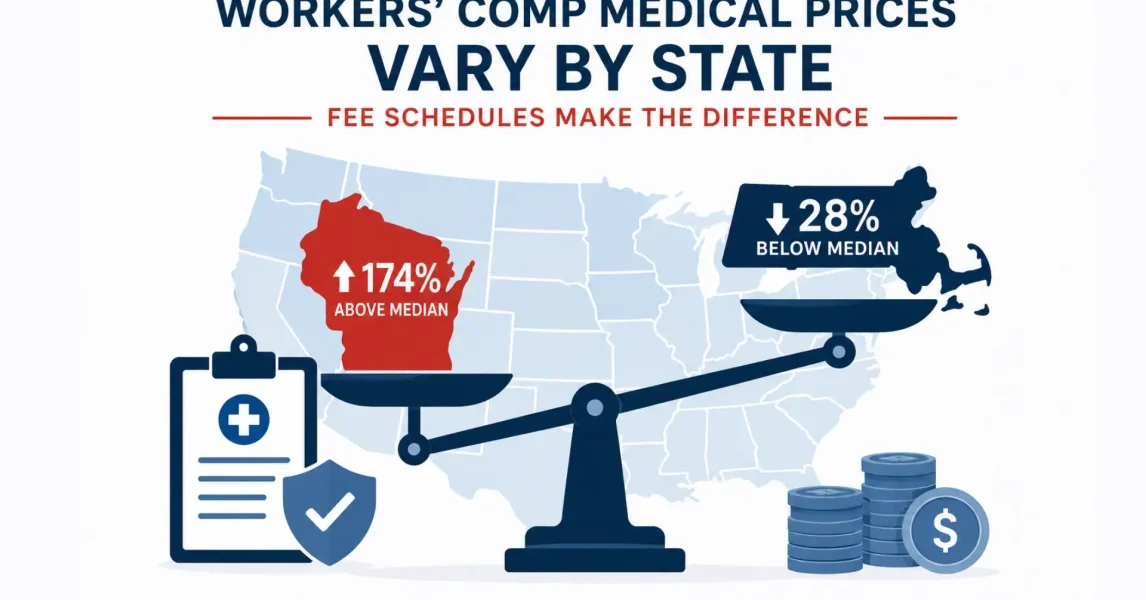
In 2025, prices paid for nonhospital professional medical services ranged from 28% below the national median to 174% above it. In fact, workers’ compensation medical prices in Wisconsin were nearly four times higher than those in Massachusetts.
Why Fee Schedules Matter
According to WCRI, one of the biggest factors affecting medical costs is whether a state uses a workers’ compensation fee schedule.
States without fee schedules (including Indiana, Iowa, Missouri, New Hampshire, New Jersey, and Wisconsin) paid significantly more for medical services than states with fee schedules in place.
Over time, the difference becomes even more noticeable. Between 2008 and 2025:
- Non-fee schedule states saw medical prices increase by 43%
- Fee schedule states experienced average increases of just 19%
These findings suggest that fee schedules remain one of the most effective tools for controlling long-term workers’ compensation medical costs.
Florida’s Dramatic Change
Florida provides a recent example of how fee schedule changes can quickly impact reimbursement rates.
In 2025, Florida increased physician reimbursement rates from 110% of Medicare to 175% and surgical reimbursements from 140% to 210% of Medicare.
The result was a 41% increase in overall professional medical service payments in a single year.
As a result, Florida moved from one of the lowest-paying states in the nation to much closer to the national median.
Why This Matters
Medical costs are one of the largest drivers of workers’ compensation expenses.
However, controlling costs should never come at the expense of access to quality care.
The challenge for policymakers is finding the right balance between:
- Fair provider reimbursement
- Access to qualified physicians
- Cost containment
- Positive patient outcomes
When reimbursement rates are too low, providers may leave the workers’ compensation system altogether, creating treatment delays and longer disability durations.
The RescueMeds Perspective
At RescueMeds, we see firsthand how timely access to care impacts recovery outcomes.
While fee schedules play an important role in managing costs, injured workers also need prompt access to physicians, medications, and treatment without unnecessary delays.
Ultimately, successful workers’ compensation systems should focus on both affordability and patient outcomes; ensuring injured workers receive the care they need while maintaining sustainable costs for employers.
The latest WCRI research confirms that workers’ compensation medical prices vary significantly across the country, and fee schedules remain a key factor in controlling costs.
As states continue evaluating reimbursement policies, the goal should be clear: create systems that support access to quality care, encourage provider participation, and help injured workers return to work safely and efficiently.