NCPA – Online Article – May 22, 2026
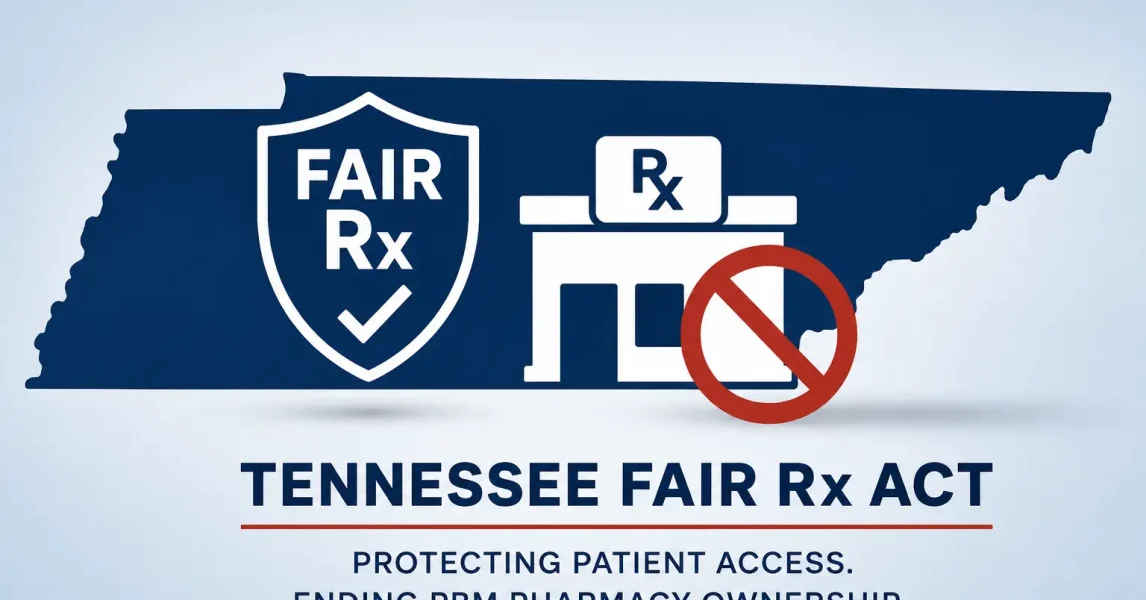
Tennessee has officially become the second state in the nation to prohibit pharmacy benefit managers (PBMs) from owning or operating pharmacies.
Gov. Bill Lee recently signed the Freedom, Access and Integrity in Registered Pharmacy (FAIR Rx) Act into law, marking a significant victory for independent pharmacies, patients, and advocates pushing for greater transparency in healthcare.
The legislation follows a similar law passed in Arkansas in 2025 and comes amid growing national scrutiny surrounding PBM business practices.
What the FAIR Rx Act Does
The FAIR Rx Act aims to address what many critics view as a major conflict of interest within the healthcare system.
Under the law, companies will no longer be allowed to simultaneously:
- Operate as a PBM
- Own or operate pharmacies
Supporters argue that vertically integrated PBM models allow large corporations to control multiple parts of the prescription drug supply chain, creating incentives that may not always prioritize patients or independent providers.
As NCPA CEO B. Douglas Hoey stated:
“You can be a PBM or you can be a pharmacy, but you can’t be both.”
A Hard-Fought Legislative Battle
The FAIR Rx Act did not pass without opposition.
According to reports, PBMs and affiliated organizations spent more than $7 million and hired over 60 additional lobbyists in efforts opposing the legislation.
Despite that pressure, Tennessee lawmakers moved forward with the bill, supported by pharmacists, independent pharmacy advocates, and healthcare organizations across the state.
The National Community Pharmacists Association (NCPA) praised the leadership of the Tennessee Pharmacists Association for helping advance the legislation.
Why PBM Ownership Is Under Scrutiny
PBMs play a major role in determining:
- Pharmacy reimbursement rates
- Prescription formularies
- Pharmacy network participation
- Medication access pathways
Critics argue that when PBMs also own pharmacies, it creates incentives for:
- Patient steering
- Reduced competition
- Preferential treatment for affiliated pharmacies
- Pressure on independent pharmacies
As a result, lawmakers in multiple states are increasingly examining whether vertical integration contributes to rising healthcare costs and reduced patient choice.
Growing Bipartisan Momentum
Importantly, PBM reform continues gaining support across party lines.
Among those supporting the FAIR Rx Act were:
- Bobby Harshbarger
- Rick Scarbrough
- Shane Reeves
- Ferrell Haile
- Cameron Sexton
- Randy McNally
At the federal level, lawmakers also recently reintroduced legislation that would require companies owning PBMs or insurers to divest pharmacy businesses nationwide.
Why This Matters for Patients and Pharmacies
Supporters of the FAIR Rx Act believe the legislation could help:
- Protect patient choice
- Improve competition
- Support independent pharmacies
- Reduce conflicts of interest
- Increase transparency within the prescription drug system
For many independent pharmacies, these reforms represent an important effort to preserve local healthcare access and stabilize reimbursement pressures.
RescueMeds Supports Transparency and Patient Access
At RescueMeds, we support efforts that prioritize:
- Patient access to medications
- Transparency within the pharmacy system
- Fair competition
- Reduced barriers to care
As the national conversation around PBM reform continues to evolve, legislation like Tennessee’s FAIR Rx Act reflects growing concern over how healthcare consolidation impacts patients, providers, and pharmacies alike.
Tennessee’s FAIR Rx Act represents another major milestone in the expanding movement for PBM reform.
With both state and federal lawmakers increasingly focused on transparency and conflicts of interest, the future of vertically integrated PBM ownership models may continue to face significant scrutiny.
For patients, providers, and independent pharmacies, these reforms could play an important role in improving access, accountability, and fairness throughout the healthcare system.