NCPA – Online Article – May 14, 2026
Momentum for pharmacy benefit manager (PBM) reform continues to grow in Washington.
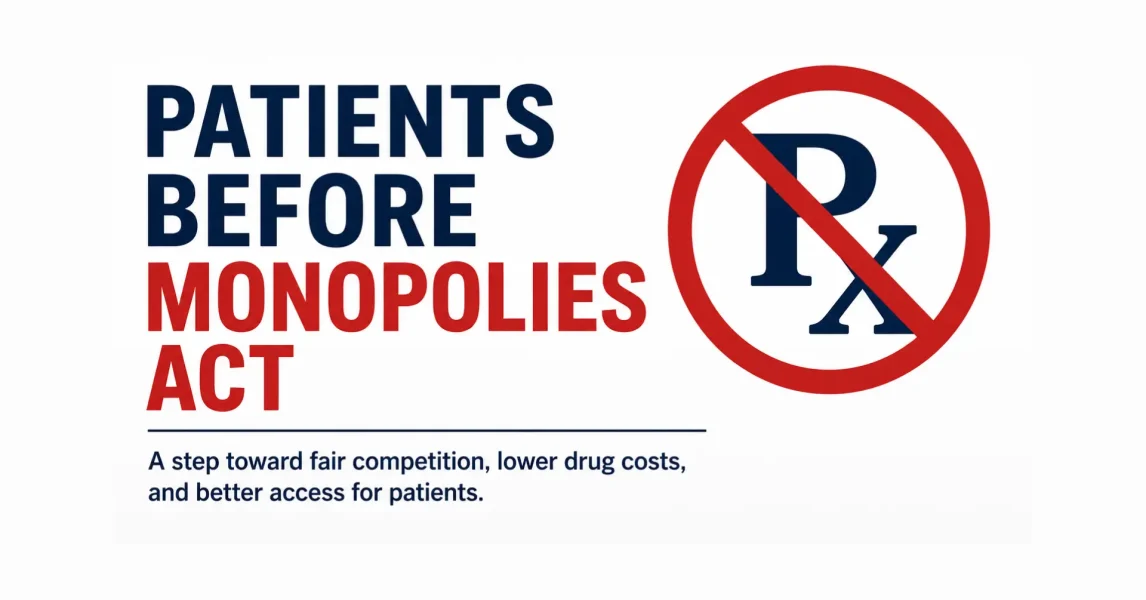
The recently reintroduced Patients Before Monopolies Act aims to address one of the biggest concerns in healthcare today: the growing power of vertically integrated PBMs and the conflicts of interest created when insurers, PBMs, and pharmacies operate under the same corporate structure.
The legislation has received strong support from independent pharmacy advocates, including the National Community Pharmacists Association (NCPA).
What the Bill Would Do
The Patients Before Monopolies Act would significantly reshape the PBM industry by prohibiting parent companies from owning both:
- A PBM or health insurer
- And a pharmacy operation
In other words, companies would have to choose between operating as a PBM or owning pharmacies; but not both.
The bill would also:
- Require divestiture of pharmacy assets within one year
- Establish stronger enforcement measures
- Allow private rights of action
- Prevent future re-consolidation that recreates anti-competitive structures
Why Vertical Integration Matters
Critics argue that vertically integrated PBMs create serious conflicts of interest.
Today, the largest PBMs are often owned by massive insurance companies that also own pharmacies. As a result, these organizations can:
- Steer patients toward affiliated pharmacies
- Limit competition from independent pharmacies
- Influence reimbursement structures
- Control access to medications
Opponents of the current model argue that these practices reduce transparency and contribute to rising prescription drug costs.
Growing Bipartisan Support for PBM Reform
Importantly, support for PBM reform continues to grow on both sides of the aisle.
The bill was introduced in the House by:
- Diana Harshbarger
- Jake Auchincloss
- Buddy Carter
- Jerry Nadler
- Troy Nehls
In the Senate, the legislation was introduced by:
- Elizabeth Warren
- Josh Hawley
- Roger Marshall
- John Fetterman
This broad bipartisan support highlights the increasing national focus on PBM accountability and prescription drug pricing reform.
What This Means for Independent Pharmacies
For independent pharmacies, the legislation could represent a major shift toward fairer competition.
According to NCPA CEO Douglas Hoey, allowing PBMs and pharmacies to operate under the same corporate umbrella creates “a huge conflict of interest” that ultimately harms both patients and independent pharmacies.
Supporters believe separating these entities could:
- Improve transparency
- Increase patient choice
- Reduce anti-competitive practices
- Help stabilize independent pharmacy operations
Why This Matters for Patients
Ultimately, this debate is about more than industry structure. It is about patient access to care.
When competition decreases and market control becomes concentrated, patients may face:
- Reduced pharmacy options
- Delays in medication access
- Higher prescription costs
- Limited provider choice
Supporters of the bill argue that restoring a more competitive marketplace could improve access and reduce barriers to care.
The reintroduction of the Patients Before Monopolies Act marks another major step in the national push for PBM reform.
As lawmakers continue to scrutinize vertically integrated healthcare models, the conversation around transparency, competition, and patient access is only gaining momentum.
At RescueMeds, we support efforts that prioritize patients, protect access to care, and promote fairness within the pharmacy system.